

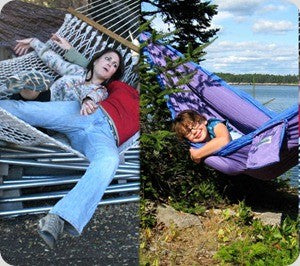
 People ask me on an almost daily basis whether it’s comfortable or healthy to sleep in a hammock. For all the questions I get asked directly, there are thousands more talking about it on sites like Reddit and online forums across the Internet regularly. Some are asking about using a hammock every night at home or on a long term backpacking trip while other people simply want to know whether you’ll wake up with neck and back pain if you spend too long in one or even ‘accidentally’ fall asleep. What they all have in common though is that The Sleep Question almost always seems to be asked from a skeptical standpoint, as in “You really shouldn't sleep a whole night in a hammock, right?” or “Yeah, but your back will be broken if you spend a whole night in one of these things, right?”
Guess what?
Sleeping in a hammock is good for you, it can even help cure your insomnia, and while it’s just now beginning to gain recognition in sleep studies it’s something that people around the world have understood and embraced for centuries. Often, the first example I’ll give to people who ask about long term use of a hammock is to look at Central and South America where literally millions of people use a hammock as their bed every single night. It’s not out of necessity or poverty, it’s done because they prefer to sleep in a hammock for all the benefits it provides and in most cases grew up sleeping in a hammock since they were infants.
So, if millions of people around the world sleep in hammocks comfortably every single night and scientific studies are proving that it’s one of the healthiest ways to sleep, why do I encounter so many people who have had bad experiences trying or approach the idea of even spending too long in a hammock with skepticism?
Bad experiences in a hammock usually boil down to two things: being in a hammock that is poorly designed or simply sleeping incorrectly in the hammock. We're going to explore both of these areas over the course of the next few blog posts and whether your goal is just to learn how to rest comfortably in a hammock or to try sleeping in a hammock every night, consider this your definitive guide to making sure that you have the right hammock and the right technique to get a good and healthy rest every time.
The series is complete, and each part lives as its own post. Here’s the whole guide, in order:
The Complete Guide, Part By Part
Part I: These Aren’t The Hammocks You’re Looking For: How You’ve Been Hammock Brainwashed
Part II: The Human Waffle Effect
Part III: The Hammock Angle: How To Relax And Sleep Comfortably In A Hammock, Even If You're A Side Sleeper
And when you’re ready to hang it: our How To Hang Your Hammock guide covers the setup itself, and the Hammock Safety guide is two minutes well spent before your first hang.
The hammock this whole series assumes: a double hammock with straps, wide enough to lie across. Our current bundles come with Pro Hanging Straps included:


