
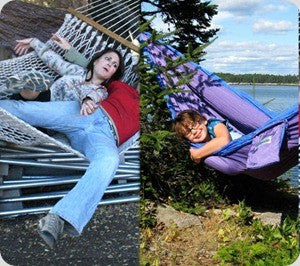
 People ask me on an almost daily basis whether it's comfortable or healthy to sleep in a hammock. For all the questions I get asked directly, there are thousands more talking about it on sites like Reddit and online forums across the Internet regularly. Some are asking about using a hammock every night at home or on a long term backpacking trip while other people want to know whether you'll wake up with neck and back pain if you spend too long in one or even 'accidentally' fall asleep. What they all have in common though is that The Sleep Question almost always seems to be asked from a skeptical standpoint, as in "You really shouldn't sleep a whole night in a hammock, right?" or "Yeah, but your back will be broken if you spend a whole night in one of these things, right?"
Guess what?
Sleeping in a hammock is good for you, it can even help cure your insomnia, and while it's just now beginning to gain recognition in sleep studies it's something that people around the world have understood and embraced for centuries. Often, the first example I'll give to people who ask about long term use of a hammock is to look at Central and South America where millions of people use a hammock as their bed every single night. It's not out of necessity or poverty, it's done because they prefer to sleep in a hammock for all the benefits it provides and in most cases grew up sleeping in a hammock since they were infants.
So, if millions of people around the world sleep in hammocks comfortably every single night, why do I encounter so many people who have had bad experiences trying or approach the idea of even spending too long in a hammock with skepticism?
Bad experiences in a hammock usually boil down to two things: being in a hammock that is poorly designed or sleeping incorrectly in the hammock. We're going to explore both of these areas over the course of the next few blog posts and whether your goal is just to learn how to rest comfortably in a hammock or to try sleeping in a hammock every night, consider this your definitive guide to making sure that you have the right hammock and the right technique to get a good and healthy rest every time.
Is it bad to sleep in a hammock every night?
No. Hammocks were full-time beds for hundreds of years before they became backyard furniture, and people in Central and South America still sleep in them nightly by choice.
I'm a side sleeper who can't stay on my back in a regular bed. In a hammock I can sleep on my back every night, and I often wake up realizing I've been there for hours.
The same rules cover long stretches, like a month of travel. Use a wide hammock, hang it loose and lie at an angle. Outside, add insulation underneath whenever the night turns cool.
Is sleeping in a hammock good for your back?
It can be, and the curve is why people doubt it. Hang a hammock tight and lie straight down the middle, and it folds you into a banana. That's where the back pain stories come from.
Hang it loose and lie at an angle instead, and the hammock flattens out under you with no pressure points. You're aiming for roughly 30 degrees off the centerline.
To find it, slide your feet 8-12 inches to one side and your head to the other until the surface feels flat. The full walkthrough is in The Hammock Angle.
If you already have back trouble, ask your doctor before you swap your mattress for a hammock. This guide is about technique, not medical advice.
Are hammocks comfortable to sleep in?
Yes, once the hammock and the hang are right. Most complaints trace back to a hammock too narrow to lie across, or a lie straight down the center.
A double-wide hammock gives you the room to lie at an angle. Every double hammock we make is rated to 440 lbs and backed by our Lifetime Warranty and Happiness Guarantee.
The series is complete, and each part lives as its own post. The complete guide, in order:
The Complete Guide, Part By Part
Part I: These Aren't The Hammocks You're Looking For: How You've Been Hammock Brainwashed
Part II: The Human Waffle Effect
Part III: The Hammock Angle: How To Relax And Sleep Comfortably In A Hammock, Even If You're A Side Sleeper
And when you're ready to hang it: our How To Hang Your Hammock guide covers the setup itself, and the Hammock Safety guide is two minutes well spent before your first hang.
The hammock this whole series assumes: a double hammock with straps, wide enough to lie across. Our current bundles come with Pro Hanging Straps included.
Hammock Sleeping FAQ
Is it healthy to sleep in a hammock every night?
Millions of people in Central and South America use a hammock as their bed by choice, not necessity. The key is how you position yourself. Sleeping diagonally rather than straight down the centerline keeps your back flat and comfortable.
Will sleeping in a hammock hurt my back?
It can, if the hammock is too small or you sleep straight down the centerline instead of diagonally. A wide hammock hung with the right sag and slept in at an angle puts most backs in a better position than a cheap mattress. The angle is the whole game, and Part III of the series walks through it.
What kind of hammock is best for sleeping?
A double-wide hammock gives you enough room to sleep at a diagonal and find a flat, comfortable position. Single-width hammocks force a banana shape that causes most of the back pain people associate with hammock sleeping.
Can you sleep in a hammock long term?
Yes. Keep the hammock wide, hang it loose and lie at an angle, the same as you would for one night. Outdoors, insulate underneath on cool nights.
How do I stay warm sleeping in a hammock outside?
The cold comes from below, because your body compresses whatever you're wearing. Put a sleeping pad inside the hammock or an underquilt beneath it. Our cold-weather hammock guide covers the whole setup.